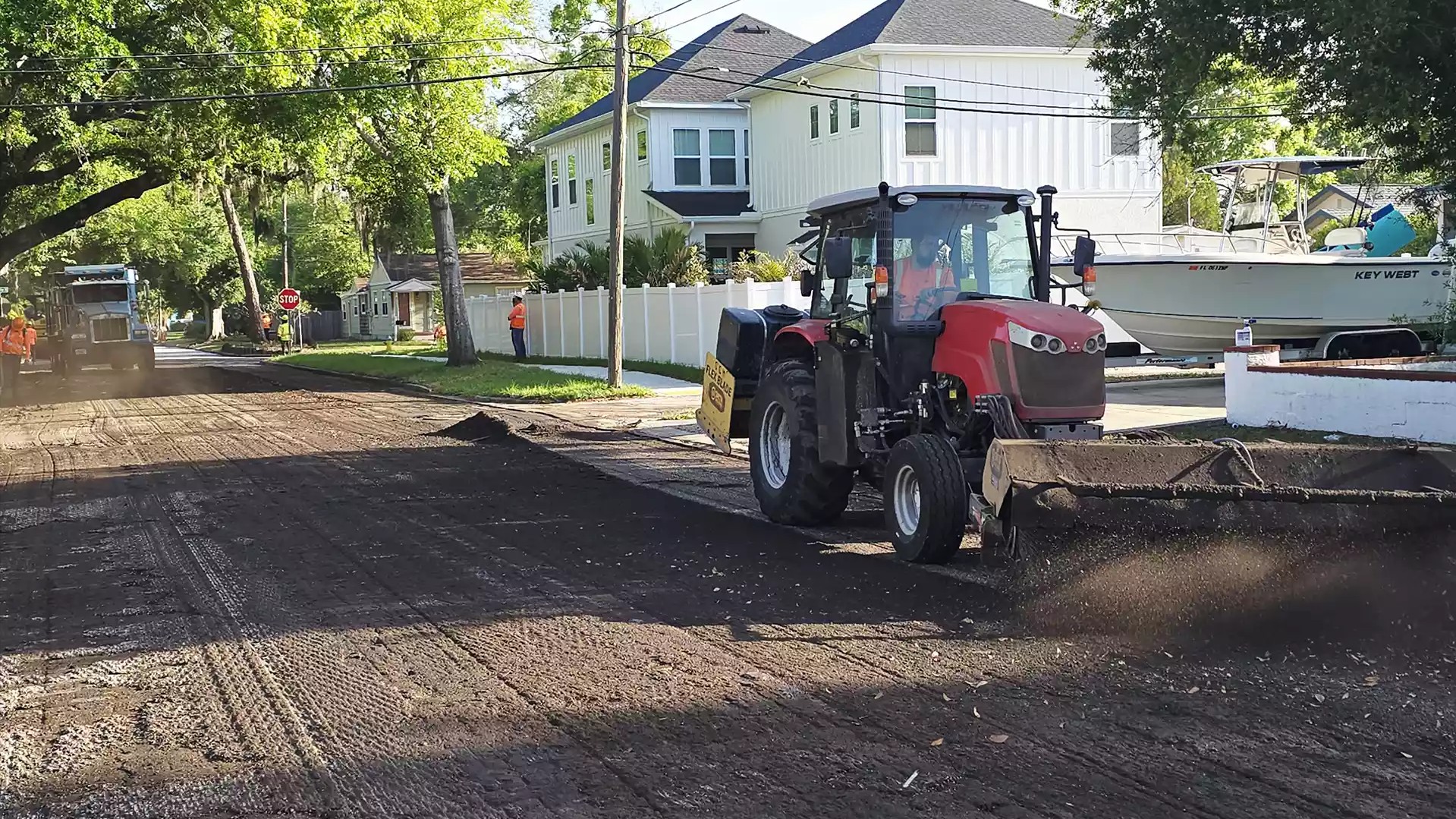
Asphalt Milling vs Overlay: How To Know What Your Parking Lot Really Needs
Not sure if your parking lot needs asphalt milling, overlay, or paving? Learn how Central Florida property managers can evaluate the right next step.
Blacktop
May 14, 2026 · 6 min read
When a parking lot starts looking worn, uneven, or unsafe, the first question is usually simple: can we just put a new layer of asphalt on top?
Sometimes an asphalt overlay is the right solution. Other times, it only covers the problem for a while. If the existing pavement has surface damage, elevation issues, drainage concerns, or deeper wear, asphalt milling may be the smarter first step before new paving begins.
For commercial clients, contractors, and property managers in Central Florida, that decision matters. The wrong repair can create avoidable cost, operational disruption, safety concerns, and pavement that does not perform the way the property needs it to.
This guide explains the difference between asphalt milling and overlay, when each option makes sense, and what to consider before starting your next paving project.
What Is Asphalt Milling?
Asphalt milling is the process of removing a controlled layer of existing asphalt from the surface. A milling machine grinds and removes damaged or aged pavement so the area can be prepared for new asphalt paving.
Milling is often used when the existing pavement is too worn for a simple overlay, but the project does not require a full reconstruction. It can help correct surface problems, improve transitions, prepare for a new layer, and reduce the risk of stacking new asphalt over old issues.
For parking lots, roads, HOA communities, and commercial properties, milling is often a practical way to create a cleaner starting point for the next phase of paving.
What Is An Asphalt Overlay?
An asphalt overlay adds a new layer of asphalt over an existing surface. When the existing pavement is sound and the main issue is surface wear, an overlay can be a cost-effective way to restore appearance and drivability.
Overlay can make sense when:
The pavement base is still stable.
Surface wear is moderate.
Drainage is not a major issue.
Elevation changes will not create curb, sidewalk, or access problems.
Cracking or potholes are limited and properly repaired first.
The key is that overlay works best when the surface underneath is still a good candidate for a new layer. If not, the new asphalt can inherit the old pavement's problems.
Why Overlay Is Not Always Enough
Overlay can look good at first, but it is not always the right long-term answer. If the underlying surface has deeper problems, a new layer may hide the issue instead of addressing it.
Common warning signs include:
Widespread cracking.
Raveling or loose asphalt.
Uneven surface areas.
Drainage problems or standing water.
Repeated potholes.
Raised transitions near curbs, sidewalks, or entrances.
Previous overlays that have already added too much height.
For property managers and commercial owners, these details matter because a parking lot is not just a surface. It affects safety, access, customer experience, property appearance, and maintenance planning.
When Asphalt Milling Is The Better Choice
Asphalt milling may be the better option when the surface needs more than a cosmetic improvement. It helps remove damaged material before new asphalt is installed, which can support a better-prepared paving project.
Milling is often worth considering when:
The pavement surface is visibly deteriorated.
The lot has been overlaid before.
Elevation needs to stay controlled near curbs or drainage points.
The existing asphalt is uneven.
Water is not moving the way it should.
The project needs a cleaner surface before paving.
The goal is to improve long-term performance, not just appearance.
Milling also helps when a property needs paving work with less uncertainty. Instead of guessing how a new layer will perform over a failing surface, milling allows the contractor to remove the damaged top layer and prepare the area more intentionally.
When Overlay Can Still Be A Smart Solution
Overlay is not the wrong solution by default. It can be a strong option when the pavement is still a good candidate for resurfacing.
Overlay may make sense when:
The pavement is mostly stable.
Damage is limited to normal surface wear.
Drainage is already working correctly.
Elevation changes will not create problems.
The property needs a practical refresh without deeper correction.
The best decision depends on site conditions. A reliable paving and milling contractor should explain the tradeoffs instead of pushing one solution for every job.
How Milling Supports Better Asphalt Paving
Good asphalt paving starts before the new asphalt is placed. Surface preparation affects how well the finished pavement can perform.
Milling can support better paving by:
Removing worn or damaged asphalt.
Creating a more consistent surface for the new layer.
Helping manage elevation and transitions.
Reducing the risk of covering deeper surface issues.
Supporting better long-term planning for commercial properties and parking lots.
For commercial clients, contractors, and property managers, this is where engineering-minded decision-making matters. The goal is not simply to make the pavement look new. The goal is to choose a solution that fits the condition of the property, expected traffic, budget, timeline, and safety needs.
What Property Managers Should Ask Before Choosing Milling Or Overlay
Before deciding between asphalt milling and overlay, ask a few practical questions.
Is the pavement only worn on the surface, or is it failing?
If the issue is mostly cosmetic or light surface wear, overlay may be enough. If the pavement is breaking down, uneven, or repeatedly failing, milling may be a better starting point.
Will a new layer create elevation problems?
Every overlay adds height. That can matter near curbs, sidewalks, entrances, drainage areas, utility covers, and ADA-related transitions.
Is water draining properly?
Standing water can shorten pavement life and create safety concerns. If drainage is already a problem, simply adding asphalt may not fix it.
How much disruption can the property tolerate?
Commercial properties, HOAs, and industrial sites often need paving work planned around tenants, customers, vendors, residents, and daily operations. A good plan should account for access, staging, and communication before work begins.
What is the long-term goal?
If the goal is a short-term visual improvement, overlay may be part of the answer. If the goal is a longer-lasting pavement solution, milling and proper preparation may be worth considering.
Why The Right Diagnosis Matters
One of the biggest frustrations for property owners and managers is not knowing what they actually need. Milling, paving, overlay, resurfacing, and repair can sound similar when they are not explained clearly.
That is why the right contractor should look at the pavement condition, ask how the property is used, explain the options, and connect the recommendation to the desired outcome.
For Blacktop, the priority is helping Central Florida clients choose a reliable and affordable solution for their milling and paving needs. That means looking beyond the surface and recommending the option that makes sense for the site, the schedule, and the way the pavement will be used.
How Blacktop Approaches Asphalt Milling And Paving
Blacktop focuses on asphalt paving and asphalt milling for commercial clients, contractors, and property managers across Central Florida. The work is guided by practical project planning, local service, quality, speed, safety, durability, and engineering-minded execution.
For a parking lot, roadway, HOA community, or commercial property, the process starts with understanding the pavement condition and the project goals. From there, the right approach may involve milling, paving, overlay, or another repair path.
The main point is simple: the best asphalt solution is the one that fits the property, not just the one that looks easiest on paper.
Ready To Start Your Next Paving Project?
Ready to start your next paving project? Our team of experts is ready to provide a reliable and affordable solution for all your milling and paving needs.
Contact Blacktop to discuss your asphalt paving or milling project in Central Florida.