Before you request an asphalt paving quote in Central Florida, know these 7 details
Planning an asphalt paving project in Central Florida? Learn what property managers, contractors, and HOA boards should know before requesting a quote.
Admin
Jun 1, 2026 · 6 min read
Requesting an asphalt paving quote should be more than asking for a price.
For a commercial property, HOA community, roadway, parking lot, or active job site, a useful quote depends on the condition of the pavement, how the property is used, whether surface preparation is needed, and what has to keep moving while work is underway.
That is especially true in Central Florida, where paved surfaces deal with heat, rain, traffic, service vehicles, drainage conditions, and daily use. A property may need new asphalt paving. It may need asphalt milling first. It may need an overlay, repair, or a larger plan depending on what is happening under the surface.
Before you request a quote, it helps to gather the right details. You do not need to know every technical answer before talking to a paving team, but knowing what to look for can make the conversation clearer and more useful.
A better quote starts with better project information
The strongest paving conversation starts with the problem, not only the price.
If a contractor understands the property, the surface condition, the traffic, the access needs, and the desired result, they can give better guidance. If those details are missing, the quote may not fully reflect what the project needs.
That matters because paving, milling, overlay, and repair are different solutions. The right recommendation should fit the site, the budget, the schedule, and the long-term use of the pavement.
1. What type of property needs paving?
The type of property affects how the project should be planned.
A commercial parking lot may need work phased around tenants, customers, and deliveries. An HOA community may need resident notices, alternate parking, and shared access planning. A contractor may need a paving partner who can coordinate with other work happening on site. A roadway or municipal-style project may involve different traffic and safety considerations.
Before requesting a quote, identify the property type and the main area that needs attention:
Parking lot.
Community road.
Drive lane.
Access road.
Commercial property.
HOA community.
Industrial site.
Roadway or related infrastructure.
This helps the paving team understand the setting before discussing scope.
2. What condition is the pavement in now?
The current condition of the pavement is one of the most important quote inputs.
Look for visible issues such as:
Cracking.
Potholes.
Raveling or loose asphalt.
Uneven areas.
Standing water.
Failed patches.
Worn entrances or turning areas.
Rough transitions near curbs, drains, sidewalks, or existing pavement.
These signs help show whether the project may be simple surface work or whether the pavement needs more preparation before new asphalt is placed.
If the same problems keep returning after repairs, mention that too. Repeated failure can be a sign that the visible surface is only part of the issue.
3. Are there drainage or standing water concerns?
Drainage should be part of the conversation before paving begins.
If water sits on the pavement after rain, the new surface needs to be planned carefully. Placing new asphalt without considering water movement may leave the same concern in place.
Before requesting a quote, note where water collects:
Near entrances.
Around drains.
Along curbs.
In parking stalls.
At low points in drive lanes.
Near sidewalks or pedestrian areas.
You do not need to diagnose the cause. The important part is making sure drainage is discussed before the paving plan is selected.
4. Does the site need paving, milling, overlay, or repair?
Many buyers are unsure which solution they need. That is normal.
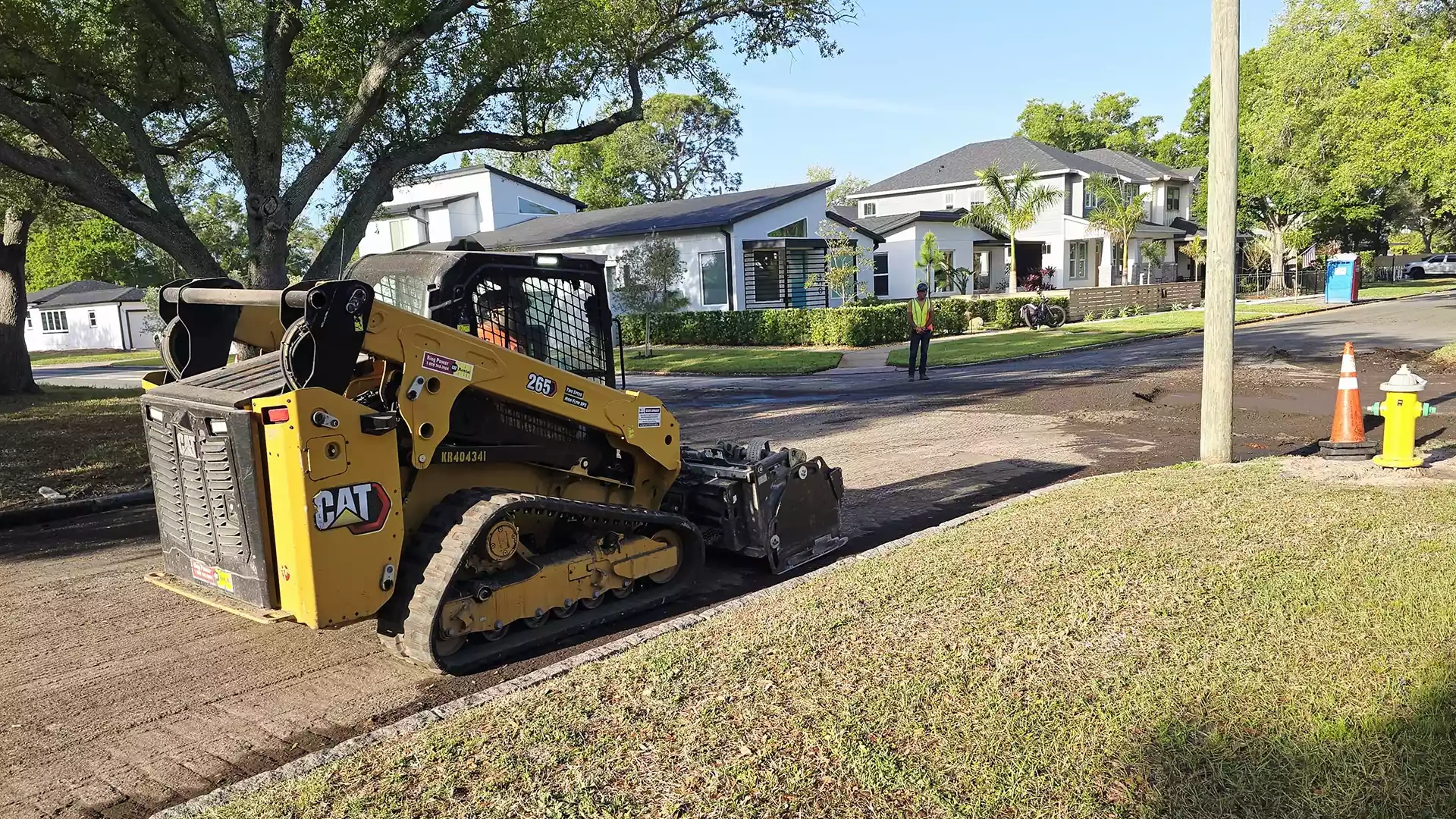
An overlay may work for some surfaces, but it is not always the right fit. Asphalt milling may be needed when the existing surface is uneven, layered, damaged, too high, or needs better preparation before new asphalt is placed. Some areas may need repair before paving. Some larger pavement failures may need a different rehabilitation approach.
Before requesting a quote, be ready to ask:
Is the existing pavement stable enough for new asphalt?
Would milling help with elevation, transitions, or surface condition?
Is an overlay appropriate, or would it cover a larger issue?
Are there areas that need repair before paving?
What preparation is included in the recommendation?
The right contractor should be able to explain the answer in plain English.
5. How does traffic move through the property?
Traffic patterns affect both the paving plan and the final result.
A quiet parking area, a busy commercial entrance, an HOA road, and an industrial access point may all need different planning. Heavy use, tight turns, frequent deliveries, or concentrated traffic can influence how the project should be approached.
Before requesting a quote, think through:
Where vehicles enter and exit.
Which areas carry the most traffic.
Whether trucks or service vehicles use the pavement.
Where residents, tenants, customers, or employees park.
Whether pedestrians move through the work area.
Whether emergency or service access must remain open.
This helps the paving team plan around real site use instead of treating every paved area the same way.
6. What access or scheduling issues matter?
Many paving projects happen on active properties. That means access planning can be just as important as the paving itself.
Before requesting a quote, identify any operational concerns:
Business hours.
Tenant or resident access.
Customer parking.
Delivery windows.
Alternate entrances.
Areas that cannot close at the same time.
Communication requirements.
Project phasing needs.
Clear access planning helps reduce confusion once work begins. It also gives the contractor a better understanding of what the property needs during the project.
7. What result are you trying to achieve?
Not every paving project has the same goal.
Some buyers want to improve safety. Some need to address drainage or rough access. Some want to improve curb appeal. Some are planning for long-term maintenance. Others need a reliable partner for a larger construction or infrastructure project.
Before requesting a quote, define the main goal:
Improve safety.
Fix worn or damaged pavement.
Prepare for heavier use.
Improve access and traffic flow.
Support tenant, resident, or customer experience.
Reduce repeated patching.
Plan a longer-term pavement improvement.
The clearer the goal, the easier it is to match the recommendation to the property.
How Blacktop helps with paving and milling planning
Blacktop provides asphalt paving and milling services for commercial clients, contractors, property managers, HOA communities, roads, parking lots, and related infrastructure needs in Central Florida.
A strong paving plan starts with understanding the pavement condition, the property, the access needs, and the long-term use of the surface. From there, Blacktop can help clients think through whether paving, milling, overlay, repair, or a different approach makes sense.
Ready to start your next paving project? Our team of experts is ready to provide a reliable and affordable solution for all your milling and paving needs.
Contact Blacktop to discuss your next asphalt paving or milling project in Central Florida.