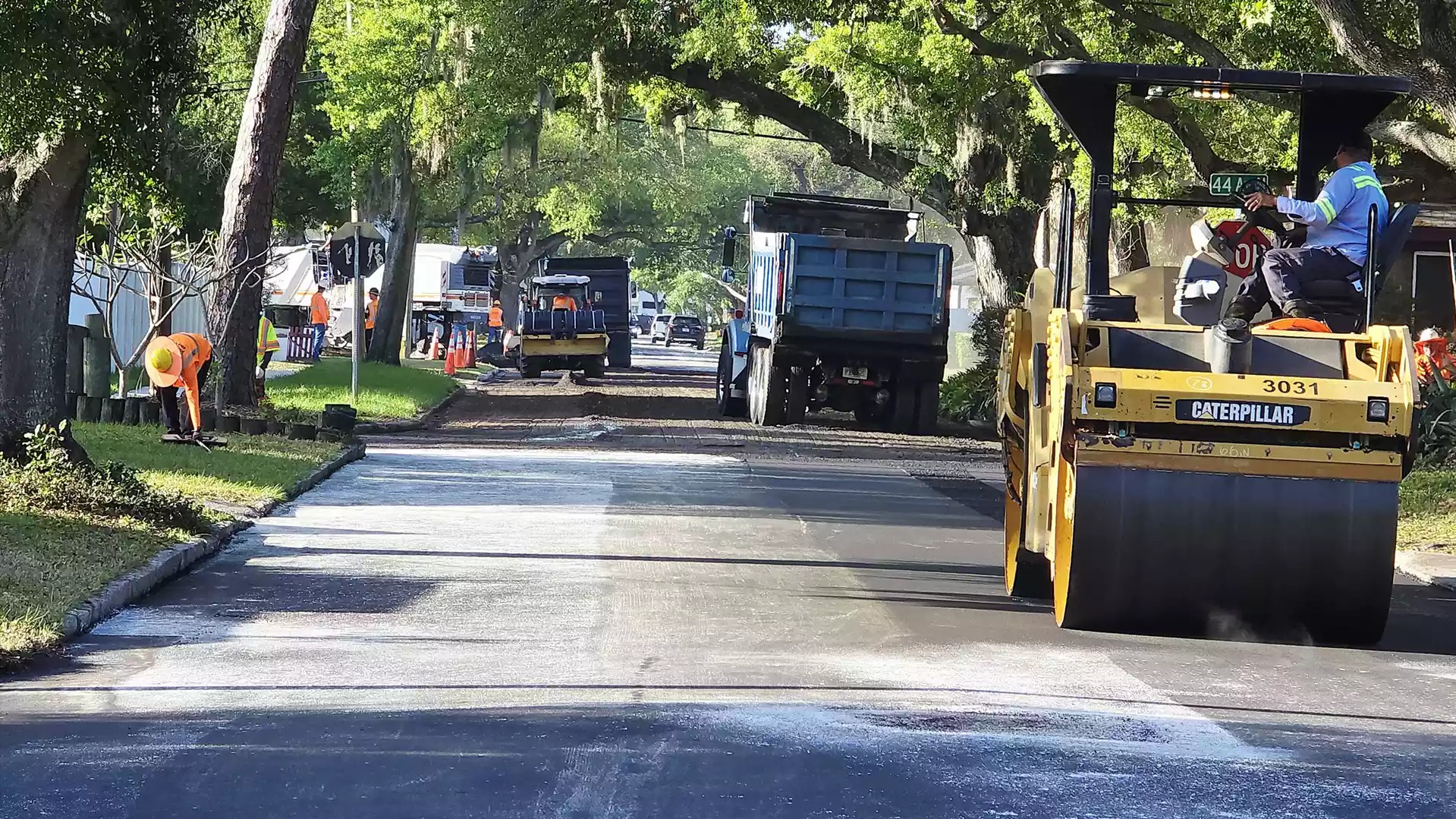
Commercial asphalt paving in central Florida: what property managers should know
Planning commercial asphalt paving in Central Florida? Learn what property managers should consider around safety, timing, drainage, budget, and durability.
Blacktop
May 19, 2026 · 5 min read
For property managers, commercial asphalt paving is not just a cosmetic decision. A worn parking lot, access road, or shared drive can affect safety, tenant experience, customer flow, drainage, maintenance planning, and the way people judge the property before they ever step inside.
In Central Florida, those decisions matter even more because paved surfaces deal with heat, rain, daily traffic, service vehicles, and constant use. When the pavement starts to look worn or uneven, the question is not only whether it needs new asphalt. The better question is what kind of paving plan will fit the property, the budget, the schedule, and the way the site is used.
This guide explains what property managers should consider before starting a commercial asphalt paving project and how to think through the right next step.
Start with the condition of the pavement
Before planning a paving project, the first step is understanding the condition of the existing surface. A parking lot may look worn for several reasons. Some issues are mostly surface level, while others point to deeper pavement problems.
Look for signs such as:
- Cracking across traffic lanes or parking areas.
- Potholes or repeated patch failures.
- Loose asphalt or raveling.
- Standing water after rain.
- Uneven transitions near curbs, entrances, sidewalks, or drains.
- Areas where traffic flow has created visible wear.
- Previous overlays that may have changed pavement height.
These details help determine whether the property may need asphalt paving, asphalt milling, overlay, repair, or a larger rehabilitation plan. A good recommendation should start with the surface condition, not a one-size-fits-all answer.
Understand how the property is used
Commercial paving decisions should reflect real site use. A small office parking lot, an HOA roadway, a retail center, and an industrial property may all need different planning because traffic patterns are different.
Property managers should think about:
- Daily car and truck traffic.
- Delivery and service vehicle access.
- Tenant or resident schedules.
- Customer peak hours.
- Emergency access needs.
- Drainage patterns.
- Parking demand during work.
- Safety and pedestrian movement.
The right paving plan should support the property while the work is happening and after the asphalt is complete. This is where clear scheduling, access planning, and communication become part of the value of the project.
Plan for safety and access
Safety is one of the main reasons commercial properties invest in asphalt paving. Damaged pavement can create trip hazards, rough driving areas, pothole risks, and drainage concerns. It can also make a property feel poorly maintained.
During the project, access planning is just as important. Many properties cannot simply shut down. Tenants, customers, residents, employees, vendors, and service vehicles may still need to move through the site.
Before work begins, property managers should ask:
Which areas need to stay open?
Some sites need phased paving so traffic can move through one section while another section is being worked on.
How will tenants or residents be notified?
Clear communication helps reduce confusion, complaints, and avoidable delays.
Where will vehicles be redirected?
Temporary traffic flow should be planned before crews arrive.
Are there safety-sensitive areas?
Entrances, walkways, loading areas, drainage points, and high-traffic zones may need extra attention.
A reliable asphalt paving contractor should help think through these operational details before the project starts.
Do not ignore drainage
Drainage is one of the most important parts of paving performance. If water sits on the pavement, it can contribute to surface wear, safety concerns, and maintenance problems over time.
Before paving, the contractor should look at how water moves across the property. The plan may need to account for slope, low areas, drainage structures, curb lines, and existing elevations.
For some properties, asphalt milling may be needed before new paving to help manage elevation and avoid creating new drainage or access issues. For others, paving may be more straightforward if the existing surface is stable and drainage is already working correctly.
The key is simple: new asphalt should be planned around the site, not just placed over the problem.
Budget should include long-term value
Cost matters in every commercial paving project. Property managers often need to balance budget, timing, safety, and long-term maintenance needs.
The lowest immediate price is not always the best long-term value if the work does not address the real pavement problem. A better conversation should compare:
- Current surface condition.
- Whether milling or preparation is needed.
- Expected property use.
- Traffic load.
- Drainage concerns.
- Project phasing and access needs.
- Long-term maintenance planning.
This helps the buyer understand why one option may cost more upfront but make better sense for the property. It also helps avoid paying for the wrong solution.
What to ask before starting a commercial paving project
Before choosing a paving partner, property managers should ask practical questions:
Does the pavement need paving, milling, overlay, or repair?
The contractor should explain the recommendation in plain English.
How will the project affect daily operations?
The answer should include access, phasing, traffic flow, and communication.
What areas create the biggest risk?
Drainage, potholes, entrances, and uneven transitions should be discussed.
How will the work support durability?
The answer should connect preparation, paving method, and site use without making unsupported promises.
What should be tracked after the project?
Property managers should keep records of work completed, dates, areas paved, and any follow-up recommendations.
How Blacktop supports commercial paving projects
Blacktop provides asphalt paving and milling services for commercial clients, contractors, property managers, HOA communities, roads, and related infrastructure needs in Central Florida.
The work is guided by practical project planning, local service, quality, speed, safety, durability, and engineering-minded execution. For commercial properties, that means looking at more than surface appearance. It means considering pavement condition, drainage, access, schedule, budget, and long-term use.
The goal is to help clients choose a reliable and affordable paving solution that fits the property.
Ready to start your next paving project?
Ready to start your next paving project? Our team of experts is ready to provide a reliable and affordable solution for all your milling and paving needs.
Contact Blacktop to discuss your commercial asphalt paving or milling project in Central Florida.