How to compare two asphalt paving scopes before comparing price
Comparing asphalt paving proposals? Review preparation, milling, drainage, access, exclusions, and project limits before comparing the final price.
Admin
Jul 1, 2026 · 5 min read
Two asphalt paving proposals can show different prices because they describe different work.
One may include milling, failed-area repair, transition work, access phasing, or detailed surface preparation. Another may describe a simpler paving approach. If you compare only the totals, you may miss the assumptions that explain the difference.
For commercial clients, contractors, property managers, and HOA boards, a useful first step is to place the scopes side by side and determine whether they are proposing the same project.
First, confirm that both proposals cover the same area
Before reviewing methods or pricing, make sure the project limits match.
Compare:
Total work area.
Parking fields.
Drive lanes.
Entrances and exits.
Loading or service areas.
Community roads.
Tie-ins to existing pavement.
Alternate or optional areas.
One contractor may include an area that another excluded. Measurements may also be based on different site assumptions. Ask for clarification when the written descriptions do not identify the same physical limits.
Compare what each contractor observed
A proposal should reflect the condition of the pavement.
Review whether each scope addresses:
Cracking.
Failed patches.
Loose or raveling material.
Rutting or depressions.
Uneven pavement layers.
Standing water.
Rough transitions.
Areas exposed to heavier traffic.
If the scopes recommend different approaches, ask what site condition led to each recommendation. A lower price may describe less work, but it may also reflect a genuinely different assessment. The goal is to understand the reasoning.
Compare surface preparation
Preparation is often where scopes begin to separate.
Look for details about:
Cleaning or sweeping.
Removal of loose material.
Localized repair.
Asphalt milling.
Edge preparation.
Transition preparation.
Treatment between existing and new asphalt when applicable.
Response to soft or visibly failed areas.
If one proposal says “prepare surface” and another lists specific activities, ask the first contractor to explain what the phrase includes.
Determine whether milling is included
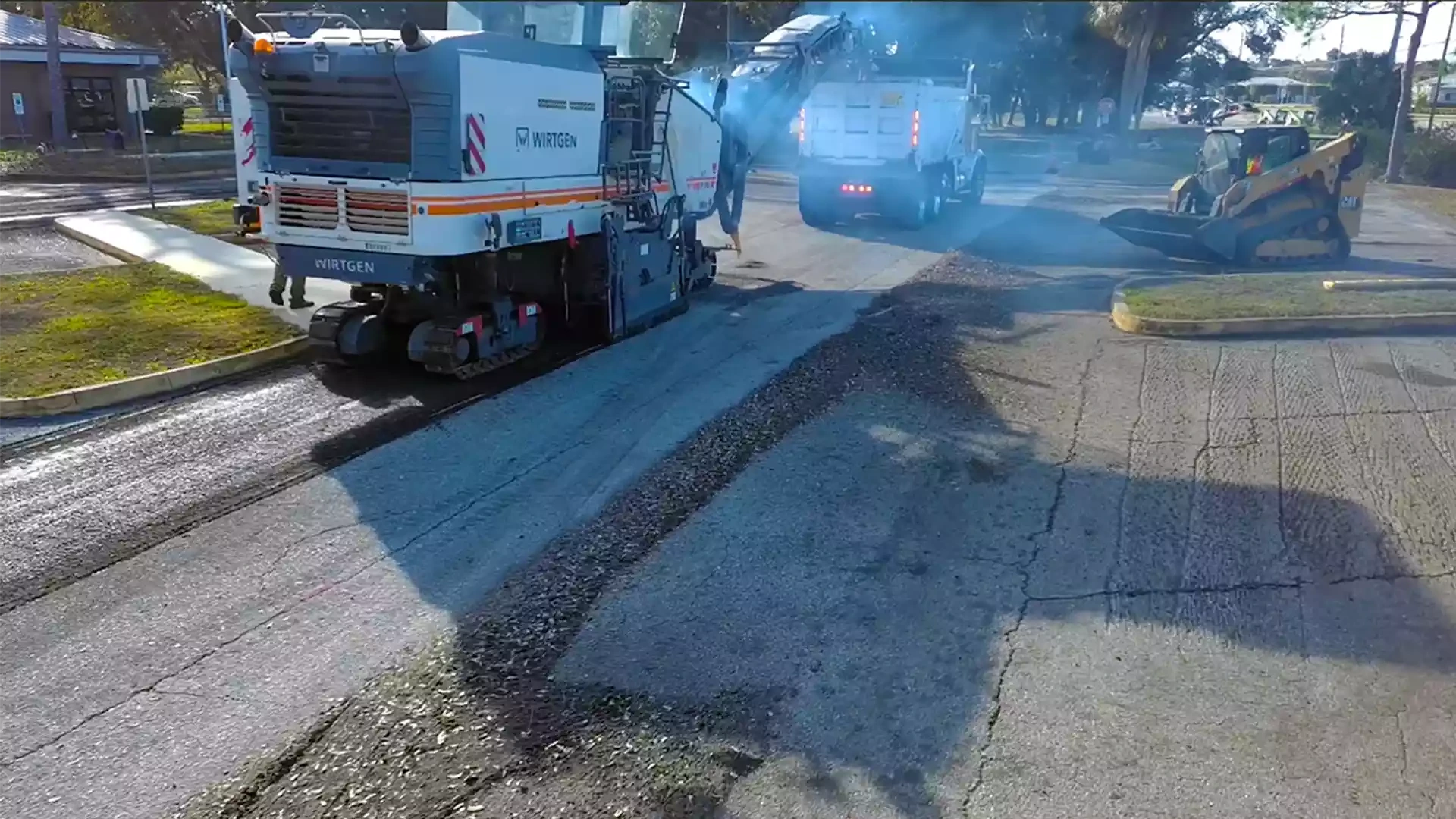
Milling can affect the project scope, equipment, material handling, elevations, and paving sequence.
Compare:
Whether milling is included.
Which areas will be milled.
The reason milling is recommended.
How the removed material will be handled.
How the milled surface will be prepared for paving.
How milling relates to curbs, drains, sidewalks, and entrances.
Do not assume a paving proposal includes milling simply because the existing surface is worn. It should be stated clearly.
Review repair assumptions
Some pavement concerns may need attention before the main paving operation.
Ask whether each scope includes:
Repair of visibly failed areas.
Treatment of soft areas discovered during preparation.
Removal and replacement in selected locations.
A process for documenting conditions that cannot be confirmed until work begins.
A contractor cannot always know every subsurface condition from a visual review. A useful scope should still explain how potential changes will be communicated.
Compare drainage and transition details
Drainage, elevations, and fixed site features can influence the final paving plan.
Look for references to:
Storm drains.
Curbs and gutters.
Sidewalks.
Building entrances.
Concrete pads.
Utility structures.
Adjacent pavement.
Low areas where water collects.
One proposal may include transition work that another leaves undefined. If standing water is already a concern, make sure both contractors understand where it occurs.
Compare the paving work itself
Each proposal should describe the intended paving operation clearly enough for the buyer to understand the difference.
Review:
Areas receiving new asphalt.
Proposed paving layers or courses.
Placement and compaction.
Edges and tie-ins.
Connections between phases.
Assumptions about the prepared surface.
Technical details will depend on the site and project requirements. Ask questions when the proposals use different descriptions or specifications.
Compare access and phasing
A commercial property may need to remain active while work takes place.
Compare whether each scope accounts for:
Maintaining an entrance.
Dividing the project into phases.
Moving parked vehicles.
Customer, tenant, resident, employee, or delivery access.
Pedestrian routes.
Equipment and truck movement.
Communication before closures.
A proposal that includes more phasing or coordination may not be equivalent to one that assumes the entire area can close at once.
Review related items and exclusions
Check whether both proposals treat related work the same way.
Examples include:
Striping.
Pavement markings.
Wheel stops.
Signage.
Concrete work.
Drainage structures.
Utility adjustments.
Landscaping.
Traffic control.
An exclusion is not necessarily a problem. An unclear assumption is.
Look at communication and change management
The proposal should explain how unexpected or changing site conditions will be handled.
Ask:
Who approves changes?
How will additional work be documented?
Who receives project updates?
How will access changes be communicated?
What happens if field conditions differ from the original assumption?
This is especially important when the project involves active operations, multiple stakeholders, or pavement conditions that cannot be fully observed before preparation begins.
Use a side-by-side comparison checklist
Create a simple table or worksheet with these categories:
Project area.
Existing pavement condition.
Surface preparation.
Milling.
Repairs.
Drainage and transitions.
New asphalt work.
Access and phasing.
Striping and related work.
Exclusions.
Communication and changes.
Final price.
Compare the price last. By then, you will have a better idea of whether the proposals describe the same result.
Questions to ask when two scopes differ
Why does one scope include milling while the other does not?
Are both proposals covering the same square footage and work areas?
Does each price include the same preparation?
Are failed areas handled the same way?
Do both contractors account for drainage and transitions?
Is phasing included in both proposals?
Are striping and related items included or excluded?
What site conditions could change the price?
The purpose of these questions is not to force every contractor into the same method. It is to understand what each contractor is recommending and why.
Compare value through scope clarity
Price matters, but it should be connected to the work being purchased.
A clear asphalt paving scope helps buyers understand preparation, project limits, access, assumptions, exclusions, and the intended result. That makes the final price more useful because it has context.
Blacktop provides asphalt paving and milling services for commercial properties, HOA communities, contractors, parking lots, roads, and related infrastructure projects in Central Florida.
Compare paving scopes with confidence before comparing price. Contact Blacktop to discuss your pavement condition, project requirements, and next step.