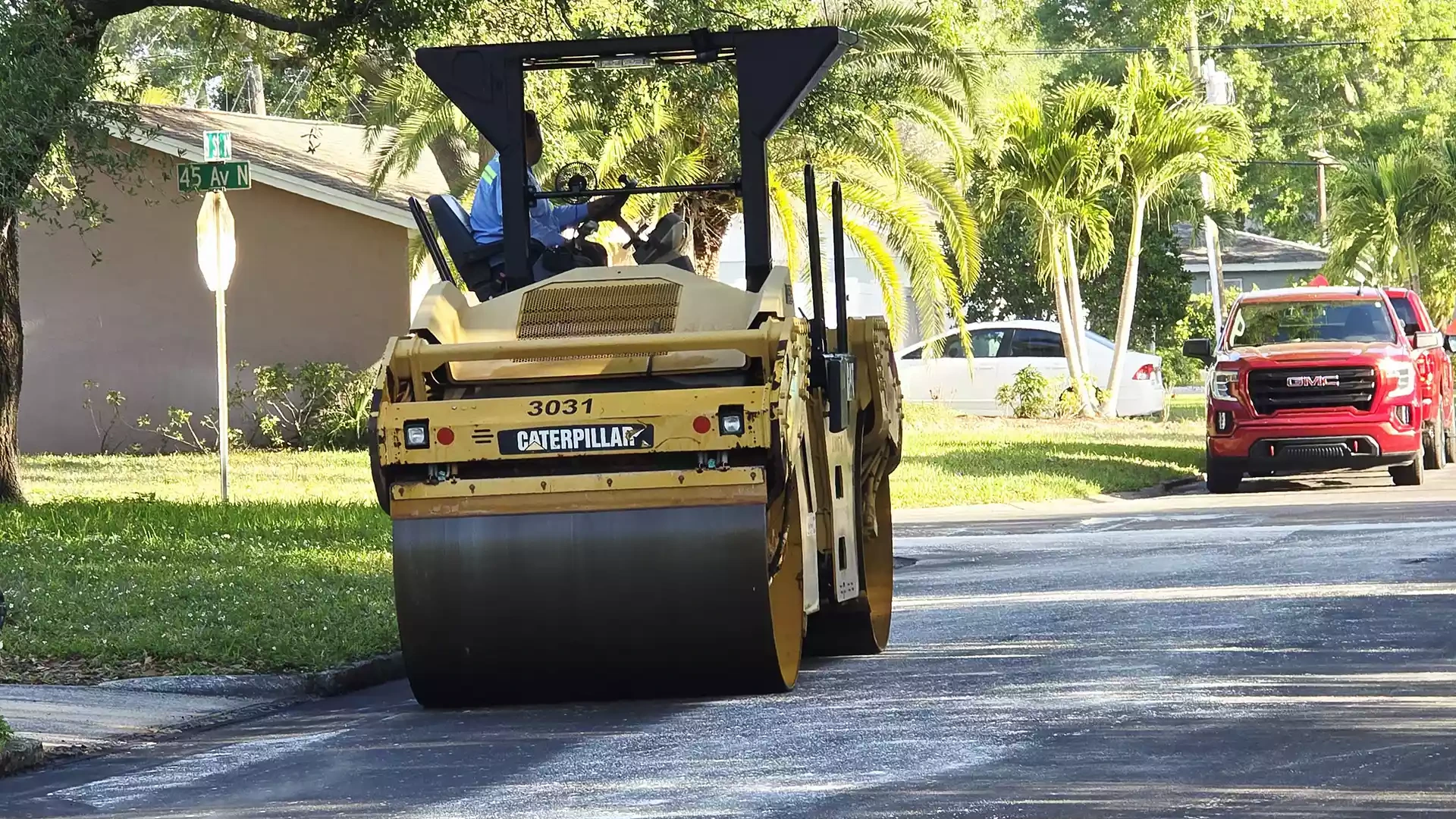
Milling vs overlay: how to choose the right next step for Central Florida pavement
Not sure whether your pavement needs asphalt milling or overlay? Learn how surface condition, drainage, elevation, and use affect the right next step.
Admin
Jun 8, 2026 · 5 min read
When pavement starts to look worn, many property owners and managers ask the same question: can we just put new asphalt over it?
Sometimes an overlay may be a practical option. Other times, the surface needs asphalt milling first. The difference matters because the right answer depends on the condition of the existing pavement, the way the property is used, and what problems need to be corrected before the next layer is placed.
For commercial properties, HOA communities, parking lots, roads, and active sites in Central Florida, this decision should not be based only on appearance. Heat, rain, drainage, traffic, access points, and previous repairs can all affect whether overlay or milling makes sense.
The decision starts with the existing pavement
Overlay and milling are not competing buzzwords. They are different approaches for different pavement conditions.
An overlay adds a new layer of asphalt over an existing surface. Milling removes a controlled layer of existing asphalt before the next paving step.
The right approach depends on questions such as:
Is the existing pavement stable?
Is the surface uneven or raveling?
Is water sitting in low areas?
Have previous overlays raised the pavement too high?
Are curbs, drains, entrances, or sidewalks affected?
Will the property need to stay accessible during the work?
Is the goal appearance, function, safety, drainage, or a broader pavement improvement?
A good paving plan should answer those questions before recommending the next step.
What an asphalt overlay does
An asphalt overlay places a new layer of asphalt over existing pavement. It can improve the driving surface, appearance, and function when the base pavement is still a reasonable candidate for resurfacing.
Overlay may be considered when:
The existing pavement is mostly stable.
Surface wear is the main concern.
Drainage and elevation are manageable.
Existing transitions will still work after the new layer is placed.
The property does not have major failures that need deeper correction.
Overlay can be useful, but it is not a shortcut for every pavement issue. If the surface underneath has serious problems, the new layer may not address the cause of those problems.
What asphalt milling does
Asphalt milling removes a controlled layer of existing pavement. After milling, the surface can be cleaned, evaluated, and prepared for new asphalt or another pavement solution.
Milling may help when the surface needs preparation before paving. It can be used to:
Remove worn or damaged surface material.
Manage pavement elevation.
Improve transitions near curbs, entrances, sidewalks, and drains.
Address build-up from previous overlays.
Prepare tie-ins between old and new pavement.
Support a better paving plan for roads, parking lots, and HOA streets.
Milling is not only about removal. It is about creating a better starting point for the next decision.
When overlay may be a practical option
Overlay may make sense when the pavement is worn but still structurally suitable for a new surface layer.
For example, overlay may be discussed when:
The pavement surface is aged but not severely distorted.
Drainage problems are limited.
There are no major elevation conflicts.
Existing curbs and transitions can still function.
The project goal is resurfacing rather than correcting deeper pavement issues.
Even then, the existing surface should be reviewed before work begins. An overlay is only as useful as the pavement conditions underneath allow it to be.
When milling may be the better first step
Milling may be recommended when the current pavement is not ready for a simple overlay.
That can happen when:
The pavement is too high
Repeated overlays can raise pavement over time. That can create issues near curbs, ramps, sidewalks, entrances, drainage structures, and tie-ins.
The surface is uneven
Uneven pavement can affect access, drainage, driving comfort, and safety. Milling can help remove high areas before new asphalt is placed.
Water is not draining correctly
Standing water may point to grade or elevation concerns. Milling may be part of a broader plan to prepare the surface before paving.
The pavement has surface deterioration
Raveling, rough areas, and deteriorated surface material may need to be removed before the next layer is placed.
Existing tie-ins need attention
Where new asphalt meets existing pavement, entrances, roadways, or parking areas, milling can help create cleaner transitions.
Why drainage, elevation, and traffic matter
For commercial and HOA properties, pavement has to do more than look better. It has to support daily use.
That means the paving plan should consider:
How vehicles move through the property.
Where water goes during rain.
How entrances and exits connect.
Whether residents, tenants, customers, or crews need access.
How the pavement meets curbs, drains, sidewalks, and existing surfaces.
Whether trucks, service vehicles, or heavier traffic use the area.
These details affect whether overlay is enough or milling should come first.
Questions to ask before approving the scope
Before deciding between milling and overlay, ask your paving contractor:
What condition is the existing pavement in?
Is overlay a practical option for this surface?
Do you recommend milling first? If so, why?
Are there drainage or elevation concerns?
How will transitions be handled?
Are there areas that need repair before resurfacing?
How will access and disruption be managed?
Which service path supports the property long term?
Clear answers help property managers, contractors, HOA boards, and commercial clients make a more informed decision.
Talk to Blacktop about the right paving and milling plan
Blacktop provides asphalt paving and asphalt milling services for commercial properties, HOA communities, roads, parking lots, and related infrastructure in Central Florida.
If you are deciding between milling and overlay, start with the condition of the pavement. The right next step should be based on drainage, elevation, surface condition, access needs, and how the property is used.
Ready to start your next paving project? Our team of experts is ready to provide a reliable and affordable solution for all your milling and paving needs.
Contact Blacktop to discuss your next asphalt paving or milling project.