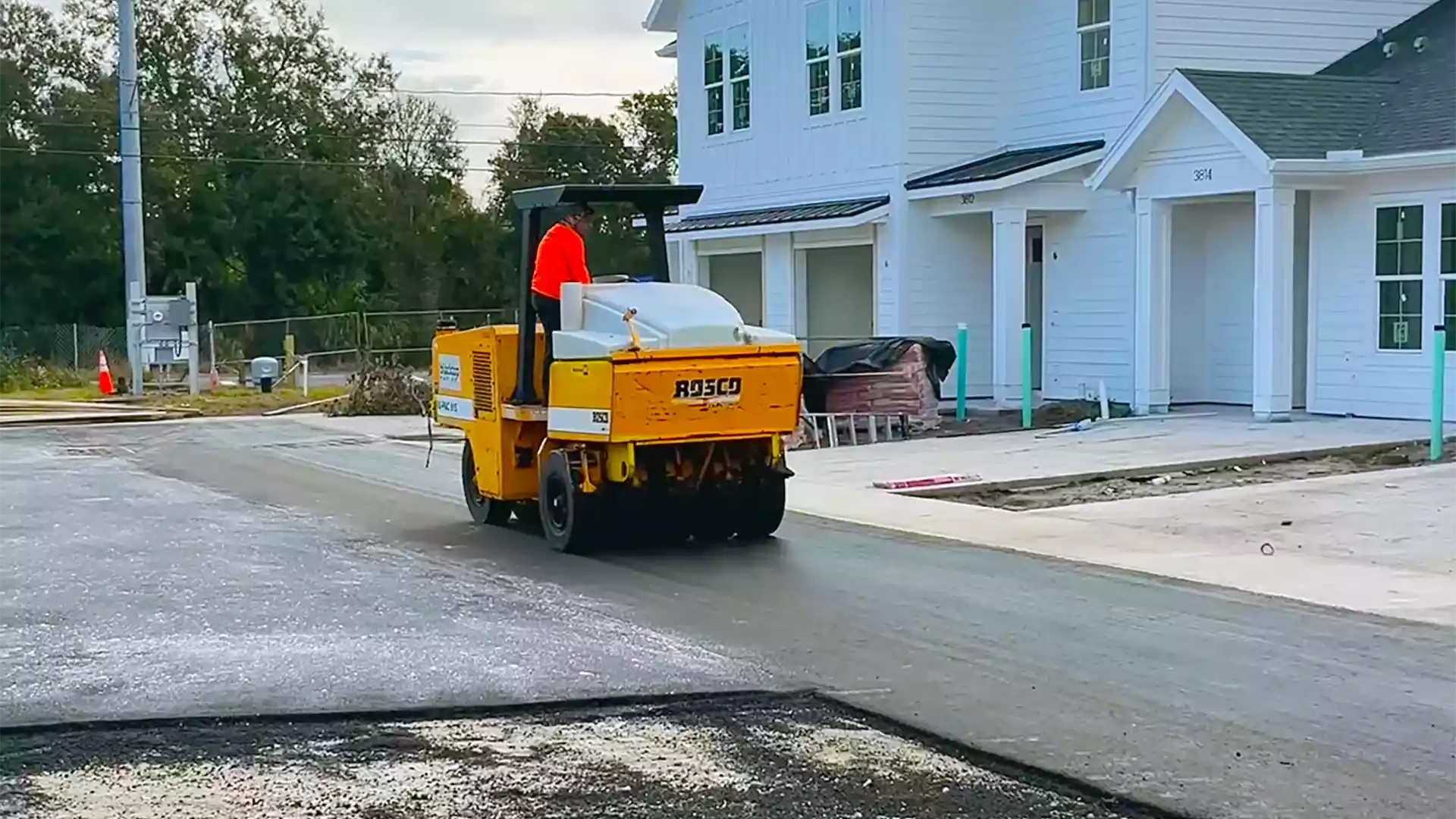
New construction asphalt paving in Central Florida: what contractors should coordinate before the final surface
Contractors planning asphalt paving on a new construction site should coordinate access, base conditions, drainage, sequencing, and final surface needs.
Admin
Jun 19, 2026 · 4 min read
On a new construction site, asphalt paving is often one of the most visible final steps. Roads, drive lanes, parking areas, and access routes help turn a construction site into a usable property.
But paving quality depends on more than the day the asphalt is placed. It depends on access, sequencing, base conditions, drainage, transitions, and coordination with the other work happening on site.
For contractors, developers, and property teams in Central Florida, the best time to plan paving details is before the final surface is needed.
Paving is one of the last visible steps, but it depends on earlier decisions
Asphalt paving can be affected by decisions made earlier in the construction process.
For example:
Site grading can affect drainage.
Curbs and sidewalks can affect transitions.
Utility work can affect surface readiness.
Heavy construction traffic can affect prepared areas.
Building access needs can affect sequencing.
Other trades may still need to move through the site.
If these details are not coordinated, the paving phase can become more difficult than expected.
Confirm site access and construction sequencing
Before paving begins, confirm how crews and equipment will move through the site.
Useful questions include:
Which entrance should paving equipment use?
Are there areas that need to remain open for other trades?
Will heavy vehicles still be moving through the site?
Is the paving work happening in phases?
Are there building, sidewalk, curb, or utility activities that need to be completed first?
Where will trucks stage or turn around?
Sequencing is especially important when paving around active construction, newly completed buildings, or areas with limited access.
Review base conditions and surface readiness
The finished asphalt depends on what is underneath it. Before paving, the project team should understand whether the surface is ready for the next step.
Review:
Base condition.
Soft or unstable areas.
Standing water.
Loose material.
Elevation changes.
Areas affected by construction traffic.
Tie-ins to existing pavement or concrete.
If a site is not ready, the paving team should know before equipment arrives. This helps the contractor discuss the right preparation and avoid treating paving as a disconnected final task.
Coordinate drainage, curbs, sidewalks, and transitions
Drainage and transitions are key details on construction sites.
The paving plan should consider:
How water will move across the paved surface.
Where pavement meets curbs.
Where pavement meets sidewalks.
Where entrances and drive lanes connect.
How new asphalt ties into existing surfaces.
Whether elevation changes could create access or drainage issues.
These details matter for commercial properties, HOA communities, multifamily developments, parking areas, service roads, and other paved infrastructure.
Protect the paving area from other trades and traffic
New paving should be protected from unnecessary conflicts during construction.
Before work starts, discuss:
Whether other trades still need access.
Whether heavy vehicles will continue using the area.
How newly paved areas will be managed after work.
Whether temporary access routes are needed.
Who will communicate reopening guidance to the site team.
The goal is to coordinate paving with the rest of the construction schedule, not isolate it from the project.
Plan communication before equipment arrives
Even on a construction site, communication matters.
Before paving, make sure the right people understand:
Work areas.
Access changes.
Staging areas.
Safety expectations.
Project contact points.
What happens before and after paving.
This may include the general contractor, site superintendent, property owner, developer, vendors, inspectors, or other subcontractors.
What to prepare before requesting a paving quote
Before requesting a paving quote for a construction site, gather the details that help the contractor understand the project.
Helpful information includes:
Site location in Central Florida.
Type of paved area.
Approximate work areas.
Whether the site is new construction, resurfacing, or repair.
Known drainage concerns.
Access or phasing needs.
Current surface or base condition.
Desired timing window, without assuming exact availability.
Photos or plans if available.
Clear information helps the paving team ask better questions and recommend the right next step.
Talk to Blacktop about construction-site paving
Blacktop provides asphalt paving and milling services for contractors, commercial properties, HOA communities, roads, parking lots, and infrastructure projects in Central Florida.
If your construction site needs paving, start with the practical details: access, sequencing, drainage, base conditions, surface preparation, and how the paved area will be used.
Ready to start your next paving project? Our team of experts is ready to provide a reliable and affordable solution for all your milling and paving needs.
Contact Blacktop to discuss your next asphalt paving or milling project.