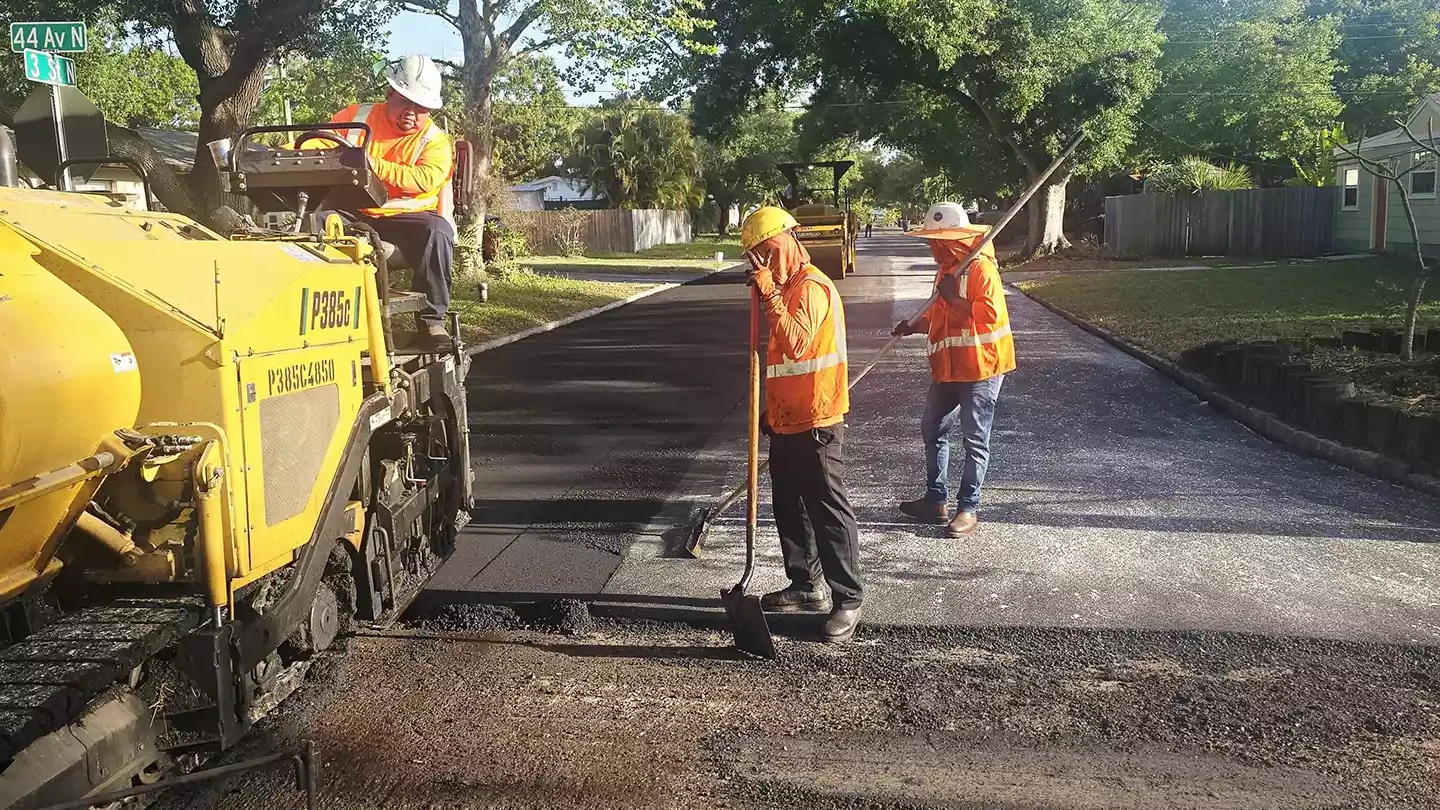
Paving day checklist for property managers and HOA boards in Central Florida
Planning paving day? Use this checklist to help property managers and HOA boards prepare for access, parking, communication, safety, and asphalt work.
Admin
Jun 5, 2026 · 5 min read
Paving day should not feel like a surprise.
For property managers, HOA boards, contractors, and commercial property stakeholders, the work itself is only one part of the project. The rest is planning: access, parking, resident or tenant communication, safety, work areas, traffic flow, and expectations before the first crew arrives.
When those details are handled early, asphalt paving can be easier to coordinate around the people who use the property every day.
This checklist explains what to think through before paving day on a commercial property, HOA community road, parking lot, drive lane, or related paved area in Central Florida.
Paving day should not feel like a surprise
Most paving-day problems are not really paving problems. They are communication and planning problems.
Residents did not know where to park. Customers were not sure which entrance to use. A delivery route was blocked. A tenant did not know a section would be closed. Vehicles were left in the work area.
These issues can create delays and frustration before the asphalt work even begins.
A practical paving plan should make the day clearer for everyone involved.
Confirm the work area before crews arrive
Start by confirming exactly where work will happen.
That may include:
Parking stalls.
Drive lanes.
Entrances and exits.
Community roads.
Shared access points.
Loading areas.
Damaged pavement sections.
Areas that need milling, preparation, paving, or repair.
If the work area is unclear, communication becomes harder. Marking or documenting the work zone ahead of time helps property managers, HOA boards, and contractors coordinate expectations.
It also helps identify any areas that need special attention, such as drainage points, curbs, sidewalks, or active entrances.
Communicate with residents, tenants, customers, and vendors
Communication is one of the most important parts of paving-day planning.
Before work begins, decide who needs to know about the project:
Residents.
Tenants.
Customers.
Employees.
Vendors.
Delivery drivers.
Service providers.
Security or site staff.
Emergency or facility contacts.
The message should be simple and practical:
What area will be affected?
When should vehicles be moved?
Which entrances or parking areas should be avoided?
How long should people expect restricted access?
Who should they contact with questions?
The goal is not to overcomplicate the project. The goal is to prevent confusion.
Plan parking, access, and traffic flow
Many properties cannot fully shut down for paving. That means access planning needs to be part of the project.
Before paving day, think through:
Where vehicles should be moved.
Whether temporary parking is needed.
Which areas should remain open.
Whether the work should be phased.
How residents, tenants, or customers will enter and exit.
Whether delivery or service vehicles need a separate plan.
How pedestrian movement will be handled.
For HOA communities, this may mean resident notices and alternate parking instructions.
For commercial properties, this may mean planning around customer flow, tenant operations, loading areas, or business hours.
For contractors, this may mean coordinating paving with other work happening on the same site.
Review safety and work-zone expectations
Asphalt paving involves crews, trucks, equipment, hot material, and active work zones. Safety expectations should be clear before the work starts.
Property teams should know:
Which areas will be closed.
Where people should avoid walking or driving.
Where cones, signs, or barriers may be placed.
Who will coordinate with the paving crew.
How questions should be handled during the work.
The paving crew is responsible for managing the work area professionally, but the property team can help by keeping vehicles and pedestrians away from active areas.
Prepare for surface preparation and paving steps
Paving day may include more than placing new asphalt.
Depending on the project, the work may involve:
Site setup.
Cleaning or preparing the surface.
Asphalt milling.
Removing loose or damaged material.
Checking transitions or tie-ins.
Placing asphalt.
Raking or handwork in detailed areas.
Compaction.
Final review and reopening guidance.
The exact steps depend on the condition of the surface and the scope of work. A good contractor should explain what the property should expect before the project starts.
Know what to expect after paving is complete
Once paving is complete, the property may still need guidance before returning to normal use.
Ask:
When can vehicles return?
Are there areas that should be avoided temporarily?
Are there instructions for heavy vehicles?
Does the site need striping, signage, or follow-up work?
Who should be contacted if there is a concern?
Avoid assuming that the pavement is ready for every kind of use the moment crews leave. Follow the contractor's reopening guidance for the specific project.
Keep project notes for future maintenance
After the project, keep a simple record of what was completed.
Useful notes include:
Date of work.
Areas paved or milled.
Any repair areas.
Any drainage or access notes.
Photos before and after.
Contractor contact information.
Follow-up recommendations.
These details can help future property managers, HOA boards, or maintenance teams understand what was done and when.
How Blacktop helps with paving-day planning
Blacktop provides asphalt paving and milling services for commercial clients, contractors, property managers, HOA communities, roads, parking lots, and related infrastructure needs in Central Florida.
A smoother paving day starts with the right planning. That means understanding the pavement condition, coordinating access, communicating with the people who use the property, and choosing the right paving or milling approach for the site.
Ready to start your next paving project? Our team of experts is ready to provide a reliable and affordable solution for all your milling and paving needs.
Contact Blacktop to discuss your next paving or milling project in Central Florida.