What should be included in a commercial asphalt paving scope?
Planning commercial asphalt paving in Central Florida? Learn what a clear project scope should cover before you compare proposals or approve the work.
Admin
Jun 29, 2026 · 6 min read
A commercial asphalt paving proposal should tell you more than the size of the area and the total price.
The scope should explain what the contractor observed, what work is included, how the surface will be prepared, how access will be managed, and what assumptions could affect the project. Without that clarity, two proposals that appear similar may describe very different work.
For property managers, commercial owners, contractors, and facilities teams in Central Florida, a clear scope makes it easier to compare recommendations, plan operations, and understand what will happen before new asphalt is placed.
Start with the property and the project objective
The scope should identify the property, the specific work area, and the reason for the project.
That may include:
A commercial parking lot.
Main entrances or drive lanes.
Loading or service areas.
Internal roads.
High-traffic turning areas.
Connections to public roads.
Areas affected by repeated cracking, patching, or standing water.
The objective also matters. A project intended to replace a visibly worn surface may require a different conversation than one intended to correct elevations, improve transitions, support heavier traffic, or address recurring failures.
A useful scope should connect the recommended work to the condition and use of the pavement.
Define exactly which areas are included
The proposal should make the project limits understandable.
Look for a written description, marked plan, measurements, or another clear way to identify:
Areas included in the project.
Areas excluded from the project.
Transitions between new and existing pavement.
Curbs, drains, sidewalks, entrances, and structures near the work.
Separate phases or alternates.
Phrases such as “repair parking lot” or “pave affected area” may leave too much open to interpretation. A clearer scope allows the owner and contractor to discuss the same physical area before work begins.
Explain the existing pavement condition
The contractor should describe the main site conditions that influenced the recommendation.
These may include:
Surface cracking.
Raveling or loose material.
Rutting or depressions.
Failed patches.
Uneven pavement layers.
Ponding or drainage concerns.
Rough transitions near entrances or concrete.
Areas exposed to frequent truck or service-vehicle traffic.
This does not require a long technical report in every proposal. It does require enough explanation to show why the recommended preparation and paving approach fit the site.
Describe surface preparation before paving
Preparation is one of the most important parts of the scope because new asphalt is placed on what remains below it.
The proposal should clarify whether the work includes:
Cleaning or sweeping the work area.
Removing loose or failed material.
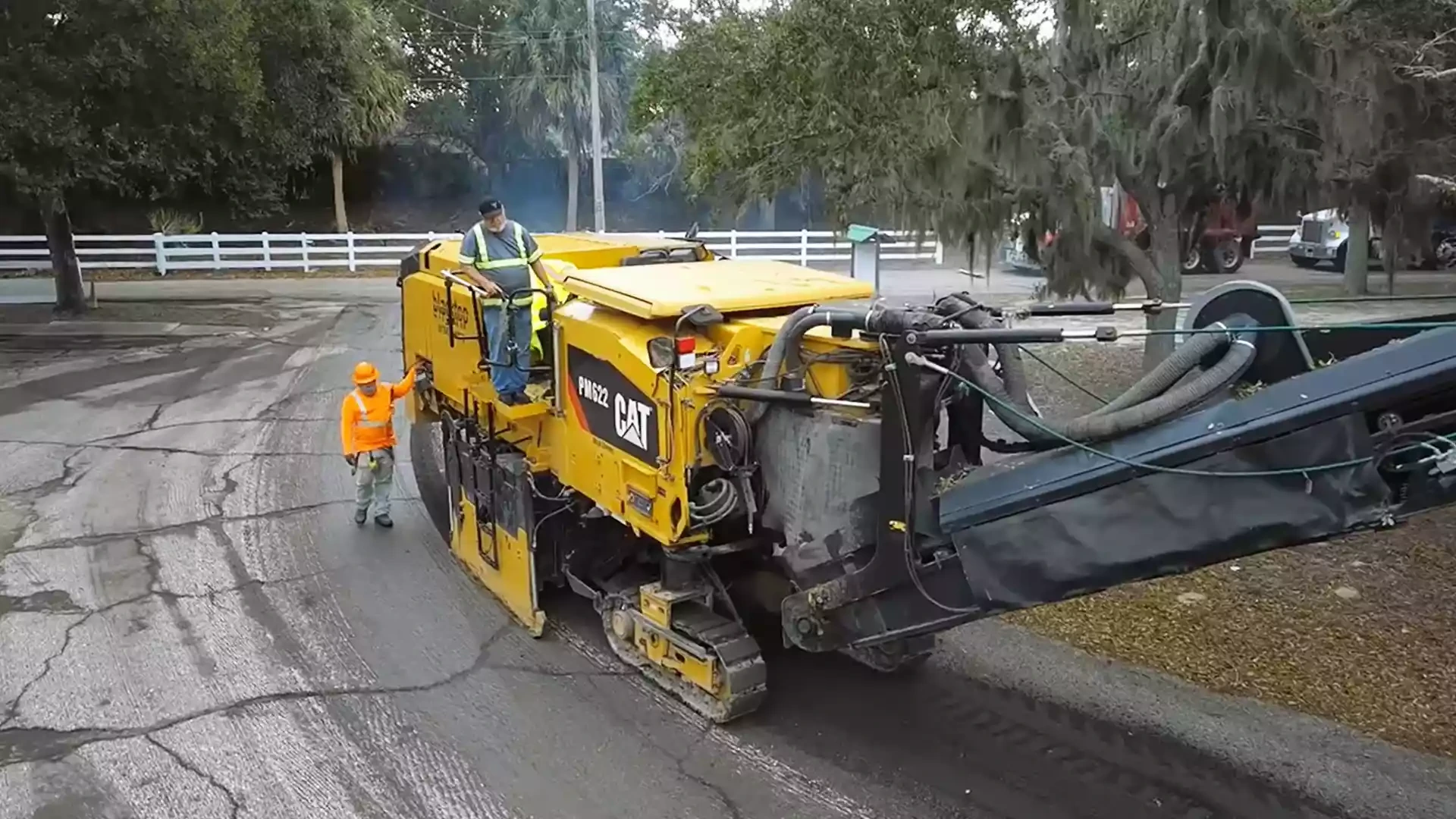
Asphalt milling.
Localized pavement repair.
Adjusting transitions or elevations.
Preparing edges and tie-in points.
Reviewing soft or unstable areas.
Applying a bonding treatment when appropriate to the selected process.
Not every property needs the same preparation. The important point is that the proposal explains what is included instead of treating preparation as an undefined step.
Clarify whether asphalt milling is included
Milling may be recommended when the existing pavement is layered, uneven, deteriorated, too high near fixed features, or not ready for a straightforward overlay.
If milling is part of the project, the scope should identify:
Where milling will occur.
The purpose of the milling.
How removed material will be handled.
How the milled surface connects to the next paving step.
Whether entrances, drains, curbs, or transitions require special attention.
If milling is not included, the buyer can still ask why the proposed paving approach is appropriate for the existing surface.
Address drainage, elevations, and transitions
New asphalt should be planned around the physical features of the property.
The scope should identify known concerns near:
Storm drains.
Curbs and gutters.
Sidewalks.
Building entrances.
Loading areas.
Existing concrete.
Utility structures.
Adjacent pavement.
If the property already holds water, mention it before approving the scope. A contractor needs to understand the concern before recommending how the paving work should relate to existing elevations and drainage paths.
The proposal should not make unsupported promises about eliminating every drainage issue. It should show that drainage and transitions were considered.
Explain the paving work
The scope should describe the new asphalt work in practical terms.
Depending on the project, that may include:
The areas receiving new asphalt.
The proposed paving course or courses.
Placement and compaction activities.
Connections to existing pavement.
Edge and transition work.
Phasing between work areas.
Technical specifications may vary by project. Buyers do not need to become paving engineers, but they should be able to understand what work is being proposed and where.
Include access and phasing assumptions
Commercial properties often need to remain partially functional during paving.
The scope should address:
Which areas may close.
Whether the project will be divided into phases.
Which entrances or drive lanes must remain available.
Where vehicles may need to move.
How deliveries, customers, tenants, employees, or vendors could be affected.
Who is responsible for site communication.
Access planning can affect the work sequence, equipment movement, and overall project coordination. It should be discussed before the crew mobilizes.
Identify related work and exclusions
A clear proposal should distinguish asphalt work from related items that may be handled separately.
Examples may include:
Pavement markings or striping.
Wheel stops.
Signage.
Drainage structures.
Concrete curbs or sidewalks.
Landscaping.
Utility adjustments.
Traffic control beyond the immediate work area.
The presence of an exclusion does not automatically make a proposal incomplete. The problem arises when the buyer assumes an item is included and the contractor assumes it is not.
Define project communication and handoff
The scope or project plan should establish who will communicate about:
Site access.
Vehicle relocation.
Changes in work areas.
Questions during production.
Reopening guidance.
Final observations or outstanding items.
For active commercial sites, communication is part of the project. Property teams, tenants, vendors, and crews need a shared understanding of what happens next.
Questions to ask before approving the scope
Before comparing prices, ask:
What pavement conditions influenced this recommendation?
Which exact areas are included?
What preparation happens before paving?
Is milling included? If not, why is the proposed approach appropriate?
How are drains, curbs, entrances, and transitions addressed?
What access or phasing assumptions are included?
Which related items are excluded?
Which site conditions could change the scope?
What does the property team need to prepare before work begins?
These questions help you compare the work behind the number.
A clearer scope supports a better paving decision
A commercial asphalt paving scope should connect the condition of the pavement to the work being recommended. It should make preparation, project limits, access, transitions, exclusions, and communication understandable before the project begins.
Blacktop provides asphalt paving and milling services for commercial properties, contractors, HOA communities, parking lots, roads, and related infrastructure projects in Central Florida.
Planning a commercial paving project? Start with a clearer scope. Contact Blacktop to discuss the pavement condition, site operations, and the right next step for your property.