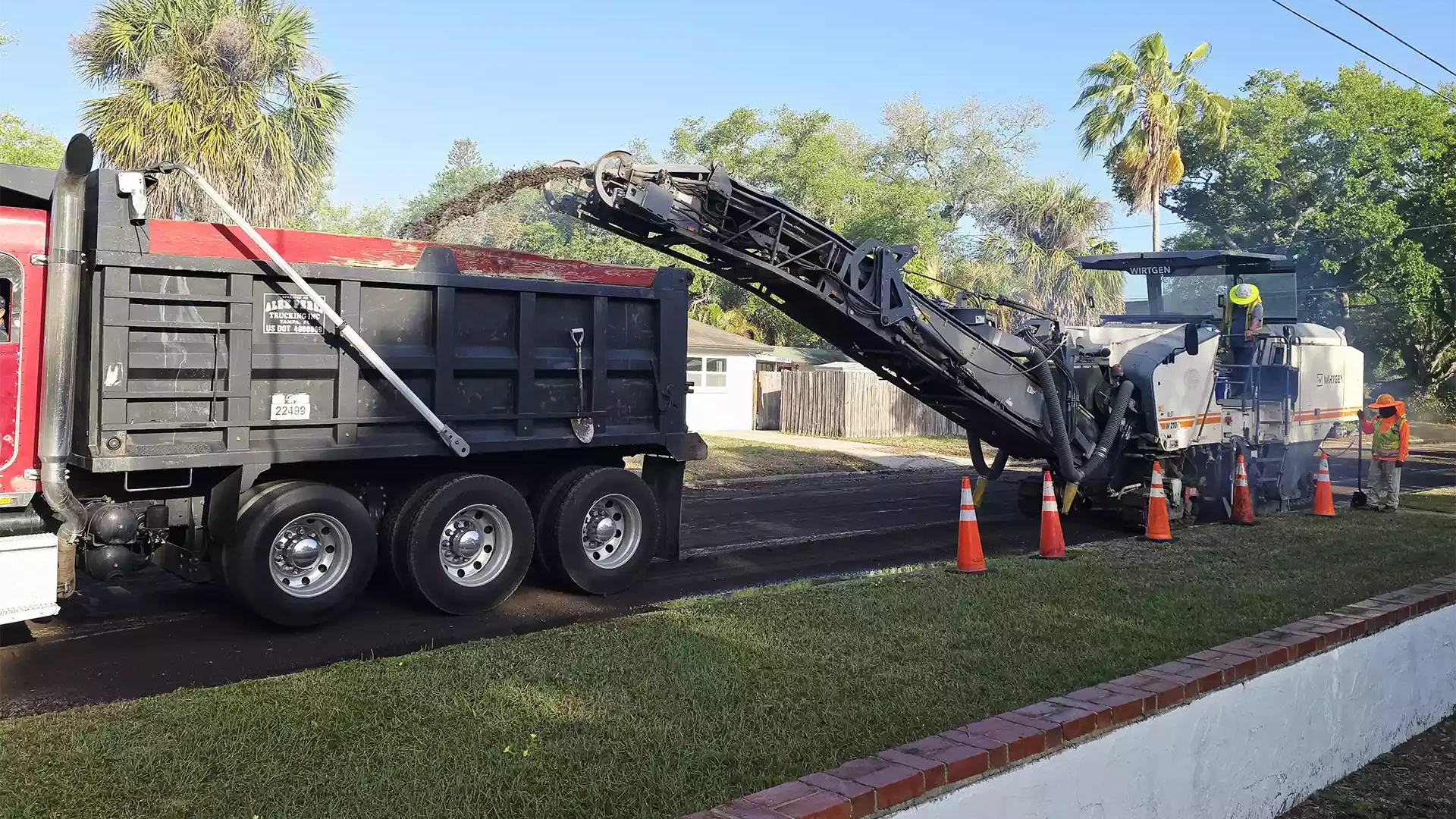
Why asphalt milling matters before a new paving project in Central Florida
Asphalt milling can help prepare worn pavement before new paving. Learn when milling matters for commercial, HOA, roadway, and parking lot projects.
Admin
Jun 3, 2026 · 5 min read
When pavement looks worn, the first question is often simple: does it need new asphalt?
But for commercial properties, HOA communities, parking lots, roads, and active job sites, the better question is more specific: what does the existing pavement need before new asphalt is placed?
Sometimes the answer is asphalt milling.
Milling is not just a step that removes old pavement. It can be part of the preparation that helps the next paving decision make sense for the site. In Central Florida, where pavement deals with heat, rain, traffic, drainage needs, and constant use, that preparation can matter for safety, access, appearance, and long-term performance.
Milling is about preparation, not just removal
Asphalt milling removes a controlled layer of existing pavement. The goal is to prepare the surface for the next step, which may include new asphalt paving, resurfacing, repair, or another pavement improvement.
For buyers, milling is often part of the conversation when the surface is no longer a simple overlay candidate.
That may happen when pavement is:
Uneven.
Too high near curbs or transitions.
Layered from previous overlays.
Cracked, raveled, or deteriorated.
Holding water.
Rough around entrances, drains, sidewalks, or tie-ins.
In need of better surface preparation before paving.
Milling helps create a cleaner starting point for the next paving step.
What asphalt milling does
During milling, specialized equipment grinds and removes part of the existing asphalt surface. The removed material is loaded for hauling, and the remaining surface can then be evaluated and prepared for new work.
The exact depth and scope depend on the project. A roadway, parking lot, commercial property, or HOA street may each require a different approach.
Milling can help with:
Removing damaged surface material.
Improving pavement elevation.
Creating cleaner transitions.
Preparing tie-ins at existing pavement.
Supporting drainage planning.
Reducing the build-up caused by repeated overlays.
Preparing for new asphalt placement.
The key is that milling should match the pavement condition and project goal.
When milling may be the right first step
Not every paving project needs milling. But milling may be recommended when the existing pavement is not a strong candidate for a simple overlay.
For example, milling may matter when:
The pavement is uneven
Uneven pavement can affect driving comfort, safety, drainage, and transitions. Milling can help remove high areas and create a more consistent surface before paving.
Previous overlays have raised the pavement
Repeated overlays can change the height of the pavement over time. That may create issues near curbs, drainage structures, sidewalks, entrances, or existing pavement edges.
Water is sitting on the surface
Standing water can be a sign that drainage or elevation needs to be reviewed. Milling may be part of the preparation that helps address those concerns before new asphalt is placed.
The surface is too damaged for an overlay
If the pavement is breaking apart, raveling, or showing repeated failures, simply placing new asphalt on top may not be the right approach. Milling can help remove damaged material before the next step.
Why milling can matter for drainage and elevation
Drainage and elevation are two of the biggest reasons milling becomes part of the paving conversation.
If new asphalt is placed without considering grade, water movement, or transitions, the property may keep dealing with standing water, rough edges, or access problems.
Milling can help create room for new asphalt without raising the final surface too much. It can also help crews work around existing features such as:
Curbs.
Driveways.
Sidewalks.
Drainage structures.
Utility areas.
Existing pavement tie-ins.
Entrances and exits.
For commercial properties and HOA communities, these details matter because the paved surface has to support real daily use.
How milling supports better paving decisions
Milling does not automatically solve every pavement problem. It is one part of a larger decision.
A practical paving and milling plan should consider:
Current surface condition.
Drainage and standing water.
Traffic load.
Property use.
Access needs.
Budget.
Long-term maintenance expectations.
Whether the surface needs paving, milling, overlay, repair, or another approach.
This is why a good contractor should explain the recommendation clearly. Buyers should understand why milling is or is not being recommended before the project begins.
Milling vs overlay: why the condition of the pavement matters
Overlay can be a reasonable option when the existing pavement is stable enough and elevation or drainage concerns are manageable.
Milling may be the smarter first step when the surface needs more preparation before new asphalt is placed.
The decision depends on the pavement, not just preference.
Useful questions include:
Is the existing surface stable?
Are there low areas or standing water?
Has the pavement already been overlaid?
Are transitions becoming too high?
Are there damaged areas that should be removed?
Will an overlay create access or drainage issues?
If those questions are not answered, the project may be solving the appearance of the problem without fully addressing the condition of the pavement.
Questions to ask before choosing the next step
Before approving a paving or milling project, ask:
What is the condition of the existing surface?
Do you recommend milling before paving?
If milling is recommended, what problem does it help solve?
If milling is not recommended, why is the surface ready for the next step?
How will drainage and elevation be handled?
How will access be managed during the work?
What should the property expect before, during, and after paving?
Clear answers help property managers, contractors, HOA boards, and commercial clients make better decisions.
Talk to a Central Florida paving and milling team
Blacktop provides asphalt paving and milling services for commercial clients, contractors, property managers, HOA communities, roads, parking lots, and related infrastructure needs in Central Florida.
If you are unsure whether your property needs paving, milling, overlay, or repair, start with the condition of the pavement. The right next step should be based on what the surface needs and how the property is used.
Ready to start your next paving project? Our team of experts is ready to provide a reliable and affordable solution for all your milling and paving needs.
Contact Blacktop to discuss your next asphalt paving or milling project.