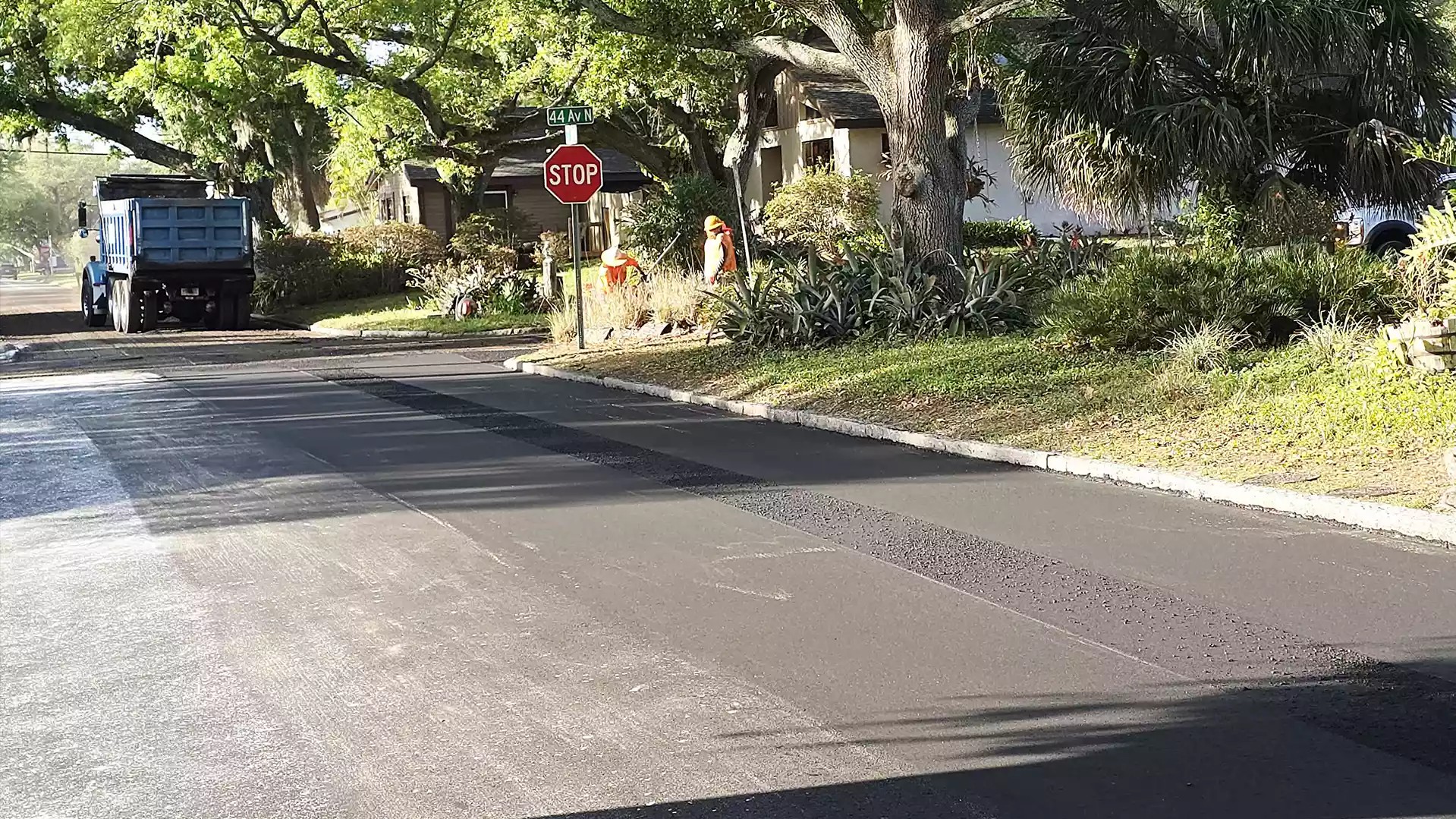
Why bad pavement costs more than curb appeal for commercial properties
Bad pavement affects more than appearance. Learn how worn asphalt can create safety, access, drainage, maintenance, and budget concerns for commercial properties.
Blacktop
May 21, 2026 · 5 min read
When asphalt starts to look worn, it is easy to think of the issue as curb appeal. A rough parking lot, cracked drive lane, or uneven surface can make a property look neglected. But for commercial properties, bad pavement can affect much more than appearance.
Pavement supports daily operations. It affects how customers, tenants, residents, employees, delivery drivers, and service vehicles move through the property. When it begins to fail, the impact can show up in safety concerns, drainage problems, access issues, maintenance costs, and budget pressure.
For property managers, contractors, and commercial clients in Central Florida, the goal is not just to make pavement look better. The goal is to choose the right asphalt paving or milling solution for the way the property is used.
Bad pavement can create safety concerns
Poor pavement can create rough surfaces, potholes, loose asphalt, uneven transitions, and areas where water collects. These issues can affect drivers and pedestrians, especially near entrances, sidewalks, parking rows, loading areas, and high-traffic paths.
Safety concerns can include:
- Trip hazards.
- Rough driving areas.
- Potholes.
- Standing water.
- Uneven transitions near curbs or walkways.
- Loose surface material.
- Poorly defined traffic or parking areas.
Not every issue requires the same solution, but visible deterioration should not be ignored. A paving contractor should evaluate the pavement and explain whether the property needs repair, overlay, milling, paving, or another approach.
Appearance still matters
Curb appeal is not the only issue, but it does matter. A worn parking lot can affect how people perceive a property before they enter the building. For retail centers, office properties, HOAs, industrial sites, and commercial facilities, the paved surface is part of the first impression.
Bad pavement can make a property feel:
- Poorly maintained.
- Harder to navigate.
- Less professional.
- Less safe.
- Less welcoming for customers, tenants, or visitors.
Fresh, well-planned asphalt paving can support a cleaner, more organized property experience. The key is making sure the work addresses the real pavement condition, not just the visible surface.
Drainage problems can make pavement issues worse
Water is one of the most important things to consider in a paving project. Standing water can create safety concerns and may contribute to pavement wear over time.
If water is already collecting in low areas, a simple surface improvement may not solve the problem. The paving plan should consider drainage, slope, elevation, and the condition of the existing asphalt.
In some cases, asphalt milling may be part of the solution because it can remove damaged surface material and help manage elevation before new paving. In other cases, repair or paving may be enough if the existing surface is stable and drainage is working correctly.
Bad pavement can affect daily operations
For a commercial property, pavement problems can interrupt more than appearance. They can affect the way the site functions.
Common operational concerns include:
- Difficult access for tenants or customers.
- Rough areas near loading zones.
- Traffic flow issues.
- Parking complaints.
- Repeated patching.
- Service vehicle concerns.
- Resident or tenant frustration.
This is why paving should be planned around how the property is used. A good project plan should account for access, staging, timing, communication, and the daily movement of people and vehicles.
Repeated patching can signal a bigger issue
Patching can be useful in the right situation, but repeated patching may be a sign that the property needs a broader paving plan.
If the same areas keep failing, the issue may involve drainage, traffic load, surface deterioration, or deeper pavement problems. At that point, continuing to patch may not be the most practical long-term approach.
Property managers should ask:
- Are the same potholes returning?
- Is water collecting in the same places?
- Are cracks spreading?
- Is the surface breaking down across larger areas?
- Has the lot already been overlaid before?
The answers can help determine whether the property needs targeted repair, milling, overlay, paving, or a larger rehabilitation plan.
Budget decisions should consider risk and timing
Bad pavement often becomes more expensive to manage when it is ignored for too long. That does not mean every property needs immediate full reconstruction. It means the decision should be based on condition, risk, budget, and timing.
A practical paving conversation should include:
- What issues need attention now.
- What can be planned for later.
- Whether milling is needed before paving.
- Whether drainage or elevation must be addressed.
- How work can be phased around operations.
- What solution best fits the property use.
This helps buyers avoid both overreacting and underplanning.
What property managers should do next
If bad pavement is becoming a concern, start with a practical assessment.
Walk the property
Look for cracks, potholes, standing water, uneven areas, loose asphalt, and high-traffic wear.
Note operational pain points
Identify where tenants, residents, customers, or vendors are experiencing problems.
Review previous work
If the property has been patched or overlaid before, that history matters.
Ask for a clear recommendation
The contractor should explain the difference between repair, overlay, milling, and paving in plain English.
Connect the solution to the property goal
The right path depends on whether the goal is safety, appearance, drainage correction, long-term performance, or a combination.
How Blacktop helps commercial properties plan asphalt work
Blacktop provides asphalt paving and milling services for commercial clients, contractors, property managers, HOA communities, roads, and related infrastructure needs in Central Florida.
The work is guided by quality, speed, local service, safety, durability, price/value, and engineering-minded execution. For properties with bad pavement, Blacktop focuses on understanding the condition of the site and recommending a practical path forward.
That may involve asphalt paving, asphalt milling, overlay, or another repair approach depending on the pavement condition and project goals.
Ready to start your next paving project?
Ready to start your next paving project? Our team of experts is ready to provide a reliable and affordable solution for all your milling and paving needs.
Contact Blacktop to discuss asphalt paving or milling for your commercial property in Central Florida.